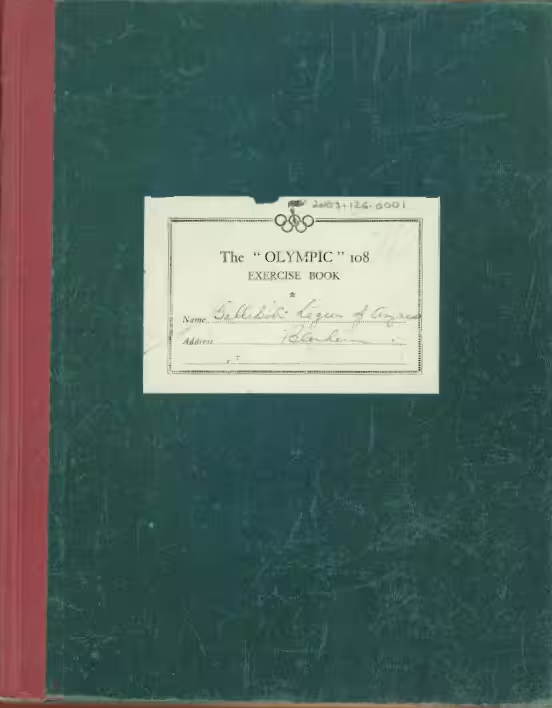
Gallipoli Legion of ANZACS Minute Book
Size: 18.6mb File Type: PDF
ReadFirst-hand accounts of the last major global conflict increasingly fall silent, and the responsibility to carry forward the lessons learned shifts to us. This undertaking is both a privilege and an obligation - not only to honour the fallen and returned, but as a mark of respect to unwritten futures. A phantom generation of children, grandchildren, and lines of descent was stolen from the world before they could ever be born. These lives, real and unrealised, represent the true measure of sacrifice made for the comparative peace we observe today.
We are currently crossing a solemn threshold where living memory becomes history, and the voices of those who lived, bled, and endured the horrific conflicts memorialised throughout these webpages become an echo.
We belong to the final generation to share the world with those who saved it - the final witnesses to their presence, and the first guardians of their absence.
Marlborough has a long and profound history of military service. It is a story told not just in the fading photographs of overseas campaigns, but right here in the concrete fortifications of Blumine Island and the grassy airfields of our own backyard. From the early volunteer militia mustering during the New Zealand Wars to the sheer scale of the 12th (Nelson and Marlborough) Regiment deploying for the Great War, our local people have consistently stepped up when the call went out.
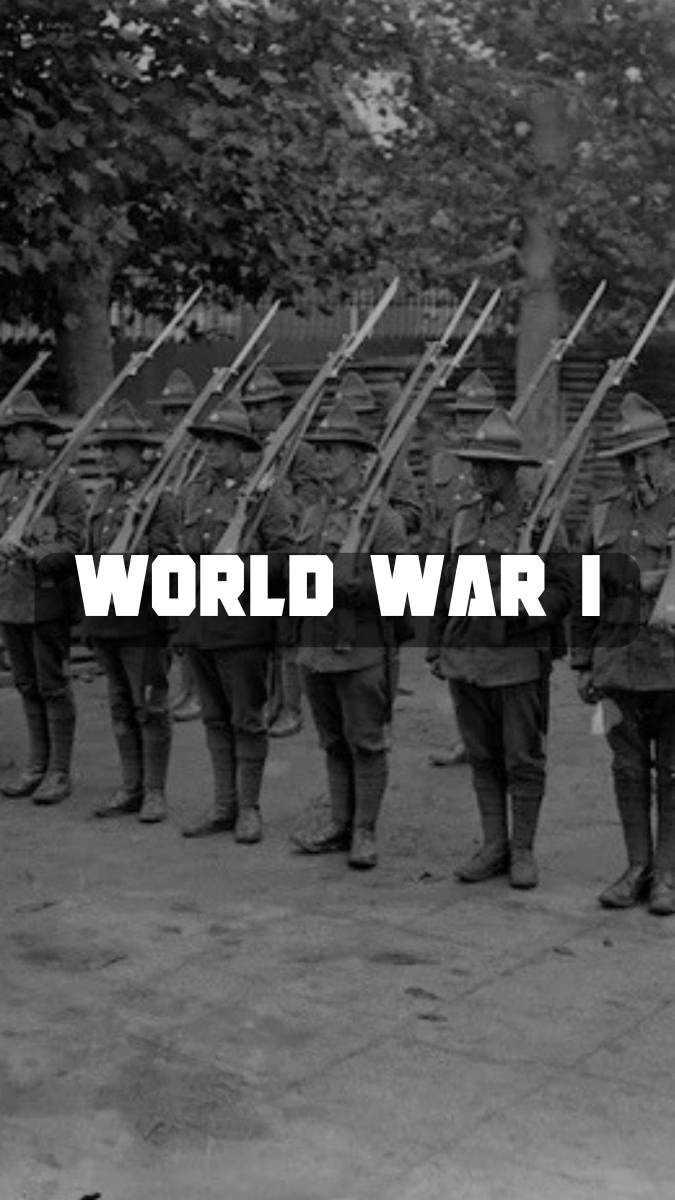
The cost of this service to our region was immense. By 1928, the community of Blenheim rallied to build the Seymour Square Clock Tower, a monument erected to honour the 419 Marlborough residents who never made it back from the mud and wire of World War I. The community had no way of knowing the names on the World War I list would not be the last of the losses that the region would suffer, as there were destructive conflicts that were still to come - resulting in the addition of the memorial fountain and newly installed plaques at Seymour Square over the following decades.
When the Second World War broke out, the home front transformed entirely. Woodbourne wasn't just a quiet strip of grass; it became a roaring RNZAF flying training facility under the Empire Air Training Scheme, pumping out thousands of pilots for the Pacific and European theatres. As the men left to fight, the women of Marlborough stepped into the breach. The Women's Land Service deployed across the Awatere Valley and beyond, driving tractors and managing flocks to ensure the agricultural boom kept Britain fed.
At the same time, the threat of invasion loomed large. We built massive six-inch gun emplacements out on Blumine Island in the Marlborough Sounds. Workers hauled materials up steep, scrubby hillsides to create a fortress anchorage intended for the US Navy - though, ironically, the American fleet never actually used it.
This page serves as the gateway to Marlborough Provincial Museum's digital webpages tracing that journey. We look at the mud, the machines, and the sheer grit of our community pulling together when it counted. After taking a digital journey through Marlborough's history of answering the call to arms, be sure to visit the museum on Arthur Baker Place for a first-hand look at the memorabilia and history preserved over decades by the Marlborough Historical Society.
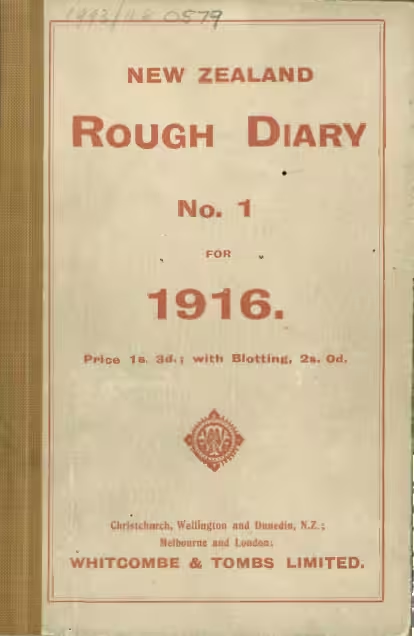
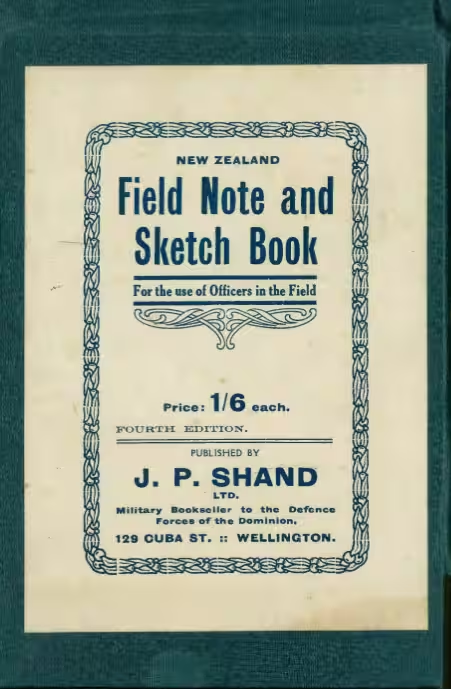
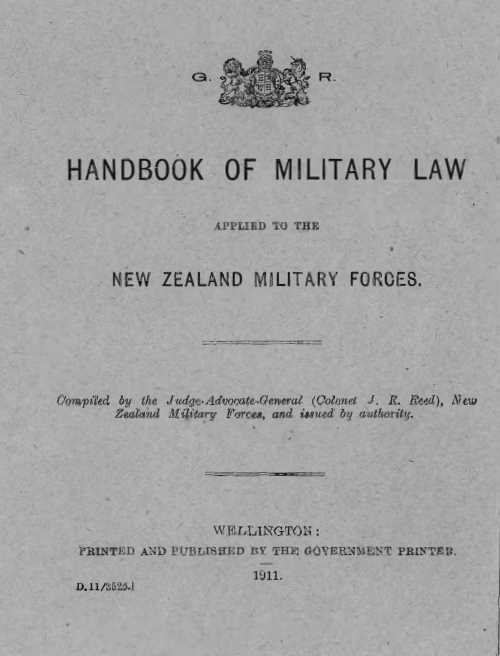
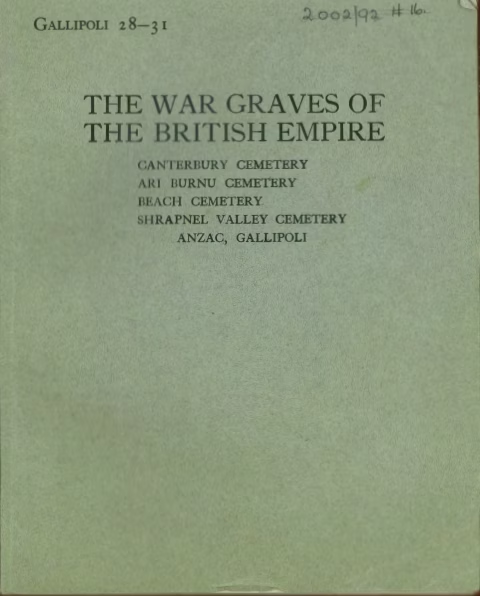
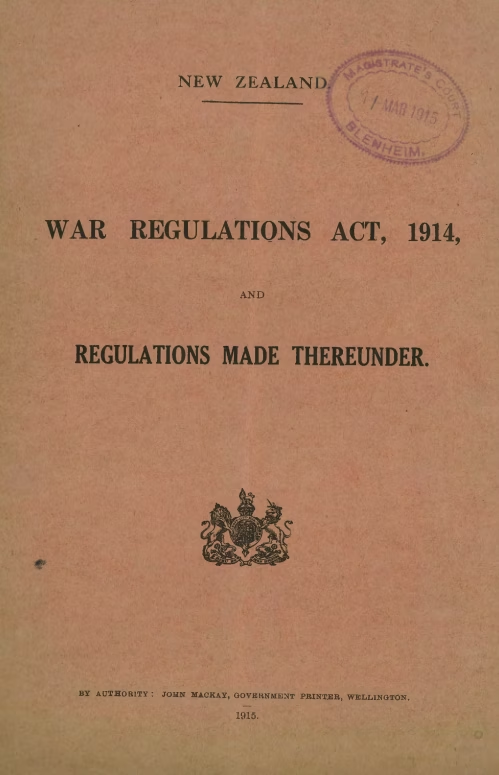
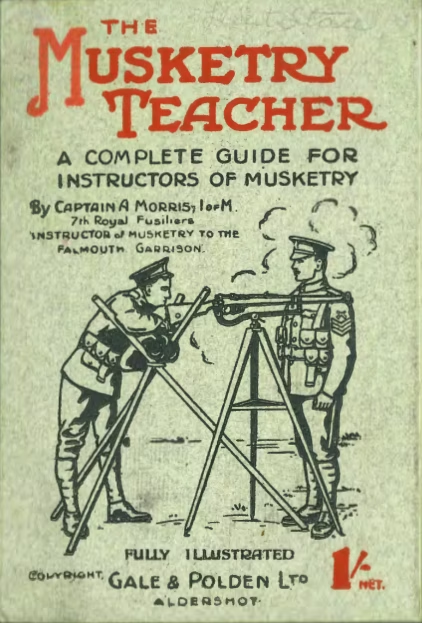
Original logs, field notebooks, operational guides and official records documenting personal experiences from the front lines.
All archival content is the property of the Marlborough Provincial Museum. We sincerely thank the individuals and families who entrust us with these artefacts for ongoing historical preservation.